Live
$TATTOO on the Robinhood ChainContract 0x3200a00d…093ba39 tribal dossiers · 7 continentsAcquire via Bankr.botNot financial advice$TATTOO on the Robinhood ChainContract 0x3200a00d…093ba39 tribal dossiers · 7 continentsAcquire via Bankr.botNot financial advice
TATTOO$TATTOO

World Desk

World Tattoo Lore

Nine dossiers, seven continents. Each entry separates what is documented from what is carried in oral tradition, and links out to museums, archives and researchers so you can go further.

01

Samoan (Sāmoa)

Oceania
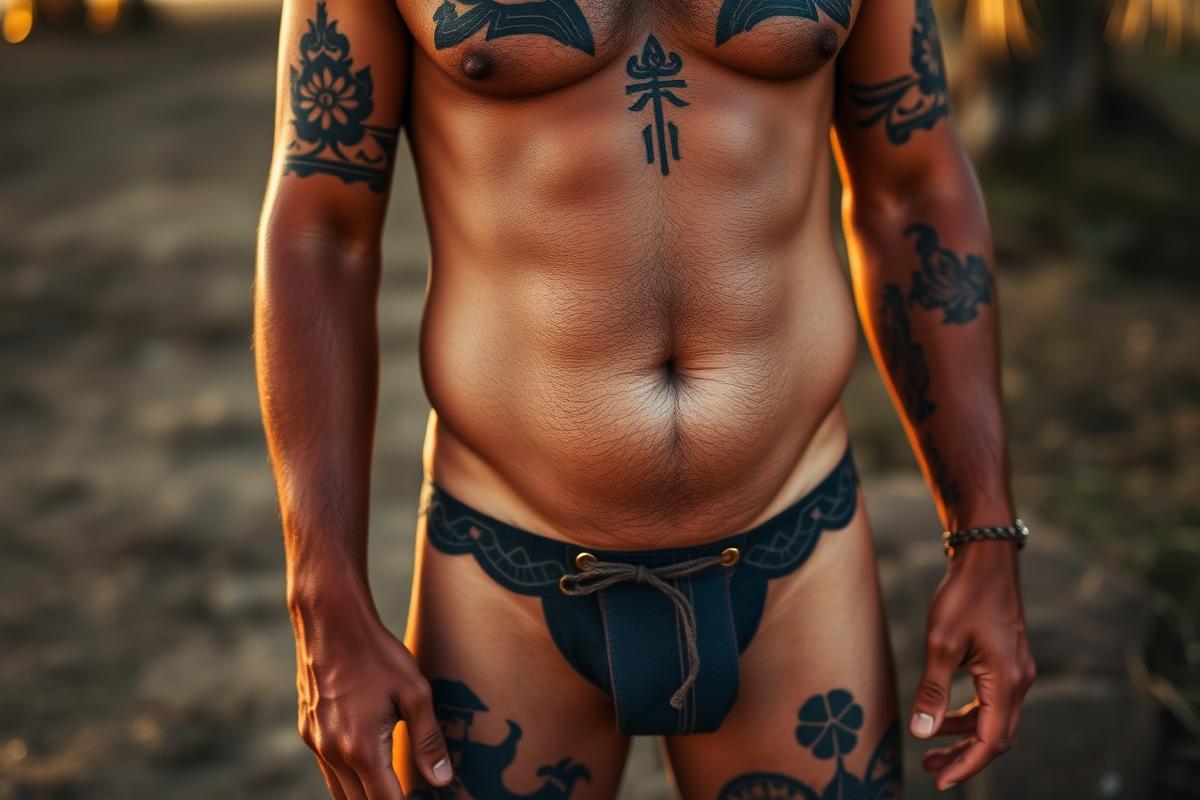
Samoan man with traditional hand-tapped pe'a tatau covering torso and thighs, photographed in warm evening light

Polynesia, South Pacific · Pe'a & Malu — hand-tapped tatau with the au comb

Samoan oral tradition tells of the twin sisters Taema and Tilafaiga, who swam from Fiti carrying the tattooing tools and a song: tattoo the women, not the men. Exhausted by the crossing, they reversed the words on arrival — and so the men of Sāmoa carry the pe'a, a dense tattoo running from waist to knee, applied over days by a tufuga tā tatau using combs of boar tusk and turtle shell.

Completing the pe'a is a public commitment to serve the aiga (family) and village. An unfinished tatau — pe'a mutu — is remembered as a mark of retreat, which is why the ordeal is undertaken with kin present, singing.

Status: Living tradition, practised by hereditary tufuga families today.
02

Māori

Oceania
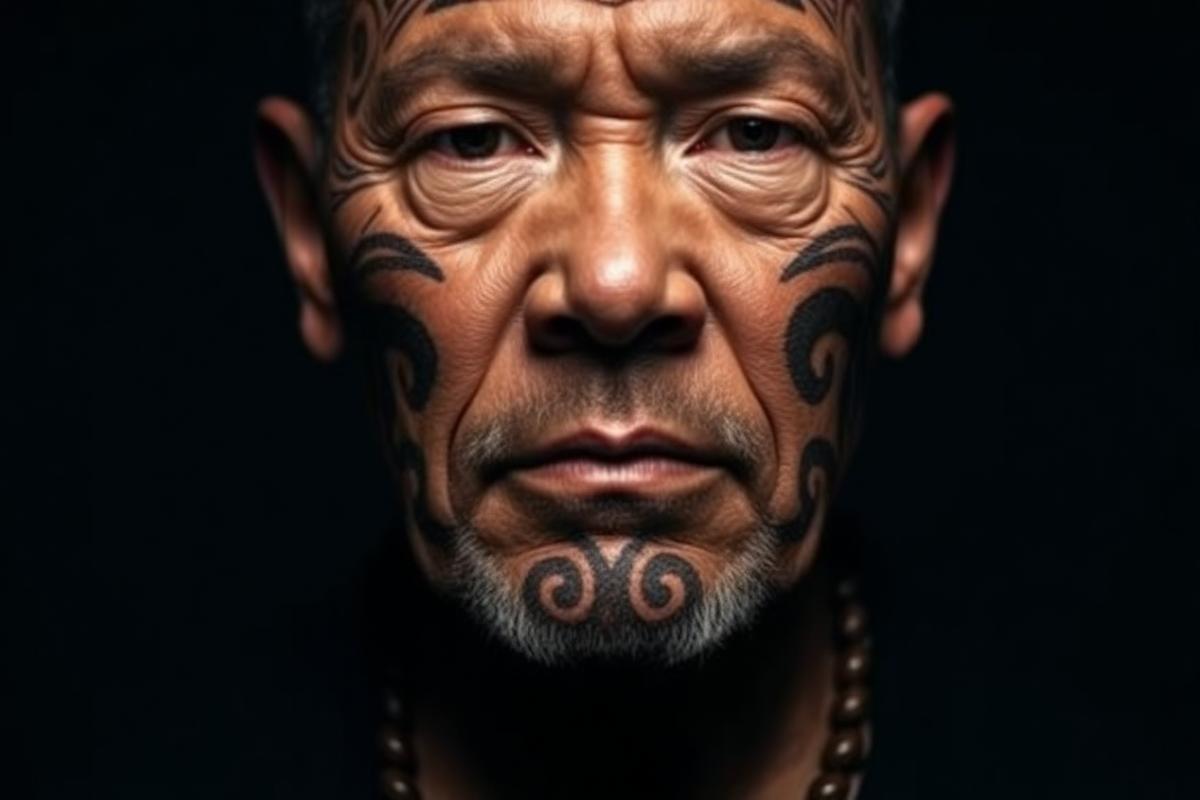
Māori man with full-face tā moko spirals, dark studio portrait, dignified expression

Aotearoa / New Zealand · Tā moko — chiselled uhi carving, now also needle-applied

Moko is traced to Mataora, who followed his wife Niwareka into Rarohenga, the underworld, and there learned from her father Uetonga that painted patterns smear but carved ones endure. He returned with the uhi chisel and the ethic that the face must not lie.

A moko is a readable document: the left side of the face has historically carried the father's lineage, the right the mother's, with rank, iwi and life events encoded in the spirals. Moko kauae, the chin moko for women, is a birthright claimed at any age.

Status: Vigorous revival since the 1990s; kaitiaki-led and increasingly worn publicly.

03

Butbut Kalinga

Asia
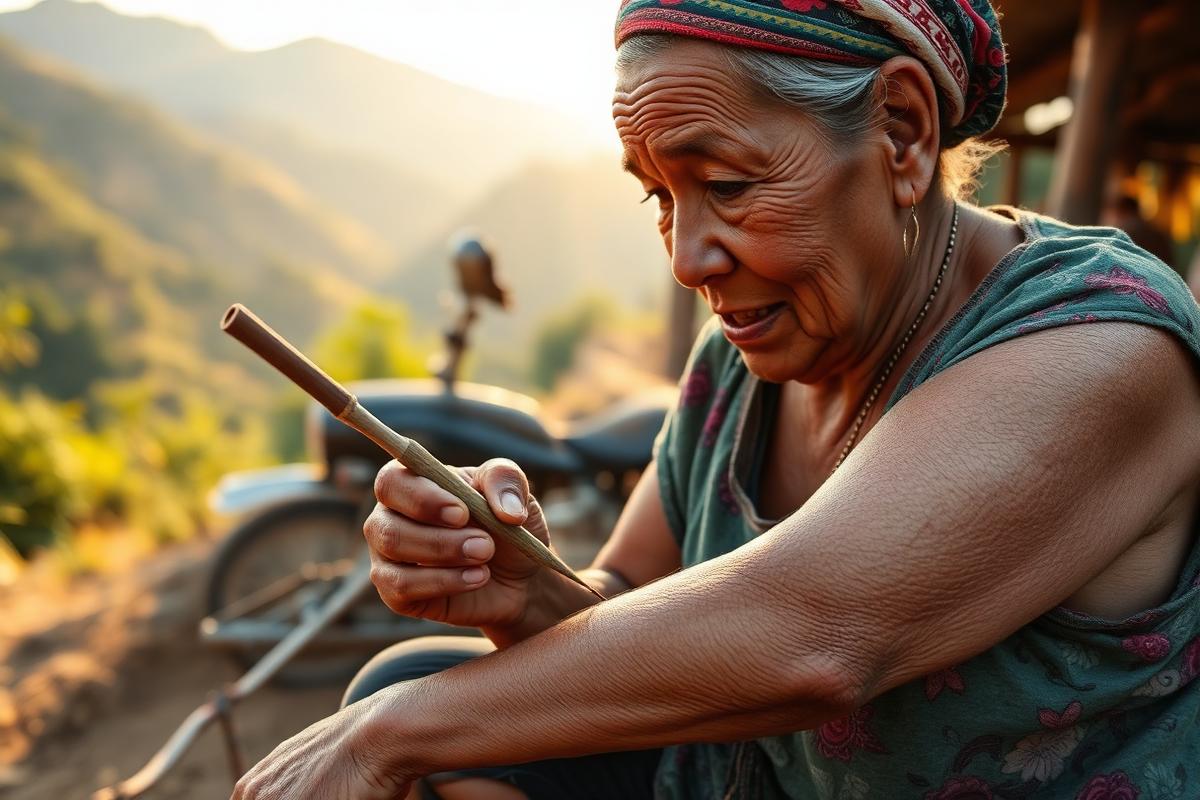
Kalinga elder hand-tapping batok tattoo onto a forearm with a thorn-tipped bamboo tool in a mountain village

Cordillera highlands, Luzon, Philippines · Batok — hand-tapped with a citrus thorn, bamboo mallet and soot ink

In the Cordillera, batok was earned. Warriors received chest and arm designs — the centipede, the python's scales, the rice terrace ladder — after returning from a raid; women received fertility and beauty patterns at the onset of adulthood. The last mambabatok of the warrior era, Apo Whang-Od Oggay of Buscalan, has trained her grand-nieces to continue the line.

Motifs are borrowed from protective animals and from the terraced landscape itself, binding the wearer to both defence and harvest.

Status: Endangered then revived; now a major site of cultural tourism and debate about consent and commodification.

Fund the archive. Carry the mark on-chain.

How to acquire $TATTOO
04

Amazigh (Berber)

Africa
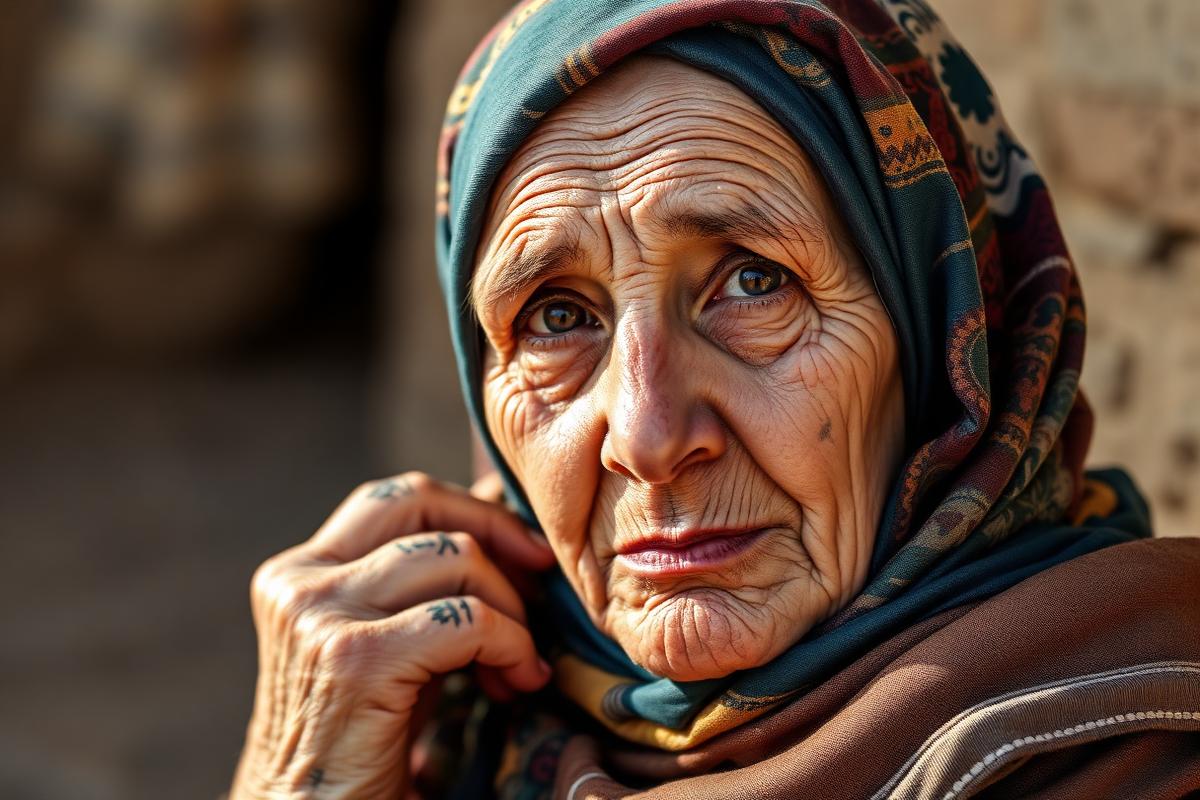
Elderly Amazigh woman with traditional indigo facial and hand tattoos wearing a patterned headscarf

Morocco, Algeria, Tunisia, Libya · Facial, hand and ankle marks in indigo-black soot ink

Amazigh women wore siyala — chin lines, temple diamonds, palm crosses — read as protection against the evil eye, as maps of tribal belonging, and as a record of marriage and mourning. Colonial upheaval and shifting religious interpretation drove the practice underground through the twentieth century, and the last generation of tattooed grandmothers is now passing.

The diamond and the partridge-eye motif are shared with Amazigh weaving and jewellery — the body treated as another loom.

Status: Critically endangered as lived practice; being reclaimed by young Amazigh artists and photographers.

05

Inuit

North America

Nunavut, Nunavik, Greenland, Alaska · Kakiniit — skin-stitching with sinew thread and soot, and hand-poke

Inuit facial tattoos, tunniit, were given to women at thresholds — first blood, first child, mastery of a skill. Missionaries and colonial administrators suppressed them almost entirely by the mid-twentieth century. The Inuit Tattoo Revitalization Project, and artists such as Hovak Johnston, brought skin-stitching back to communities within living memory of the last tattooed elders.

Lines on the chin, forehead and hands mark stages of a woman's life and were understood to matter on the journey after death.

Status: Active revival since 2016; now widely worn across the Arctic.

06

Shipibo-Conibo

South America

Ucayali river basin, Peruvian Amazon · Kené geometric marking in huito (genipa) black, historically on face and body

The kené labyrinth is described by Shipibo artists as the visible trace of a song. Designs seen in vision are painted, embroidered and — in earlier generations — inked, so that the pattern on a person, a pot and a cloth are the same pattern in different materials.

Kené is medicine as much as ornament; the design is said to order the body the way the song orders the ceremony.

Status: Body painting and textile kené thrive; permanent marking is rare today.

Fund the archive. Carry the mark on-chain.

How to acquire $TATTOO
07

Sámi & Northern European traditions

Europe

Sápmi — northern Norway, Sweden, Finland, Russia · Stitched and hand-poked marks; heavy reliance on shared duodji motifs

Europe's oldest tattooed body is not Sámi but is European: Ötzi the Iceman, dated to roughly 3350–3100 BCE, carries 61 carbon marks clustered over joints and the lower back. In Sápmi, protective marks and the sun-symbol motifs of the noaidi drum survive in craft where the tattooing record itself was broken by Christianisation and state assimilation policy.

Ötzi's marks sit over degenerated joints, which has led researchers to read them as therapeutic rather than decorative — the oldest known argument that a tattoo can be a treatment.

Status: Historic practice largely lost; contemporary Sámi artists are rebuilding a visual vocabulary.

08

Bedouin & Levantine pilgrim traditions

Middle East

Arabian Peninsula, Iraq, Jordan, Palestine, Egypt · Daqq — soot and milk hand-poke; and Jerusalem pilgrim block-print tattoos

Bedouin daqq marked chins, wrists and ankles for protection and beauty, applied by travelling women. Separately, in Jerusalem's Old City the Razzouk family has stamped pilgrimage tattoos with carved olive-wood blocks for a lineage they trace back some 700 years — Coptic and Armenian pilgrims returning home with a dated Jerusalem cross as proof of the journey.

One tradition protects the body; the other certifies a journey. Both treat the skin as a document others are meant to read.

Status: Daqq is in steep decline; the Razzouk pilgrim tattoo continues commercially in Jerusalem.

09

Ainu

Asia

Hokkaidō, Sakhalin, Kuril Islands · Sinuye — mouth-encircling and forearm tattoos on women

Ainu women were tattooed in stages from childhood, the mouth mark widening over years into a broad smile-shaped band completed before marriage. Meiji-era Japan banned the practice in 1871; the last fully tattooed Ainu women died in the late twentieth century.

The mouth band was understood to guard the body's openings against harmful spirits, and to mark readiness for adulthood.

Status: Extinct as a living practice; documented and mourned, with symbolic revival in Ainu art.

Fund the archive. Carry the mark on-chain.

How to acquire $TATTOO

Every dossier here is free. The token is what keeps the desk open.

Read the token dossier, then follow the Bankr.bot walkthrough. Verify the contract address before every transaction.